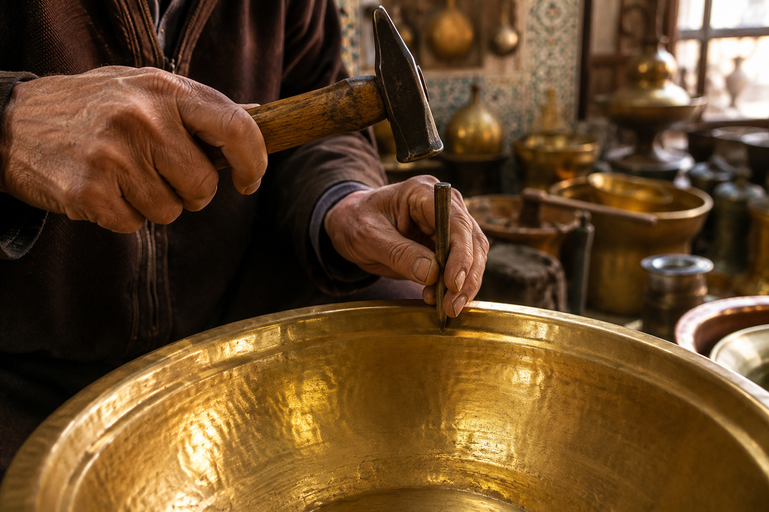
If you’ve just brought home a hand-hammered brass sink, faucet, or lantern, you’ve chosen a material that behaves nothing like the chrome or stainless steel most of us grew up cleaning. Unlacquered brass is alive. It reacts to air, water, and touch, and that reaction is exactly what gives it the warm, storied look that first drew you to it. The trade-off is that it needs a different kind of care — not more work, just different work.
This guide walks through what unlacquered brass actually is, how to clean it safely, how to speed up or slow down the patina, and the mistakes that damage a fixture’s finish for good.
What Makes Unlacquered Brass Different
Most mass-produced brass fixtures are coated with a clear lacquer that locks in a uniform, shiny finish. It looks polished on day one and stays that way, but the coating can chip, yellow, or peel over time — and once it does, the brass underneath tarnishes unevenly.
Unlacquered, or “living finish,” brass skips that coating entirely. Every piece from our Fez and Marrakech workshops is 100% pure hammered brass with nothing sealing the surface. That means it’s free of the synthetic layer that traps heat and hides tool marks, but it also means the metal is in constant, gentle conversation with the air around it — darkening near the water flow, staying brighter where hands rest on it most, and slowly building the kind of depth that no factory finish can fake.
Everyday Cleaning: What Your Brass Actually Needs
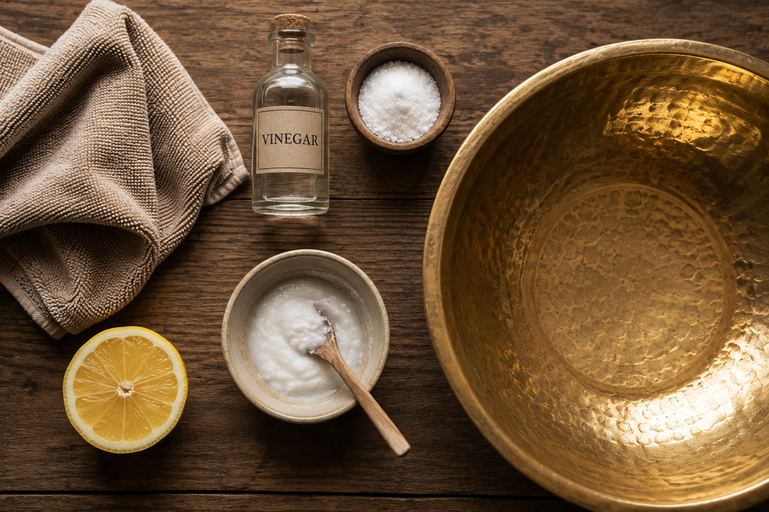
For day-to-day upkeep, unlacquered brass asks for very little:
- Warm water and a mild, pH-neutral soap — dish soap works fine.
- A soft cloth, ideally microfiber, for wiping and drying.
- Immediate drying after any contact with water, since standing moisture is what causes uneven spotting.
Wipe the piece down, rinse if soap was used, and dry it completely. That’s the entire routine for most owners. Fingerprints, dust, and light smudges come off with nothing more than this.
Removing Tarnish Naturally
If tarnish has built up and you want to bring back some shine without harsh chemicals, a simple household paste does the job:
- Mix equal parts flour, salt, and white vinegar (or lemon juice) into a thick paste.
- Apply it to the tarnished area with a soft cloth.
- Let it sit for a few minutes — on unlacquered brass, don’t leave acidic mixtures on for more than about a minute at a time, since they can strip the patina unevenly if left too long.
- Buff gently, rinse thoroughly with warm water, and dry immediately.
For stubborn or deep tarnish, a dedicated brass polish (applied sparingly, in small sections, with a clean cloth for buffing) will restore more shine than a DIY paste. Just know that heavier polishing resets the patina clock — the piece will start developing its aged character again from a brighter starting point.
What to Avoid
A few habits will damage unlacquered brass faster than normal aging ever would:
- Abrasive sponges, scouring pads, or steel wool — these scratch the soft metal permanently.
- Bleach or harsh chemical cleaners — too aggressive for a bare metal surface.
- Leaving acidic substances on too long — lemon, tomato, or vinegar left sitting will eat into the finish unevenly rather than cleaning it evenly.
- Letting water sit and air-dry on its own — this is the most common cause of blotchy water spots on brass sinks and faucets.
Should You Fight the Patina, or Let It Happen?
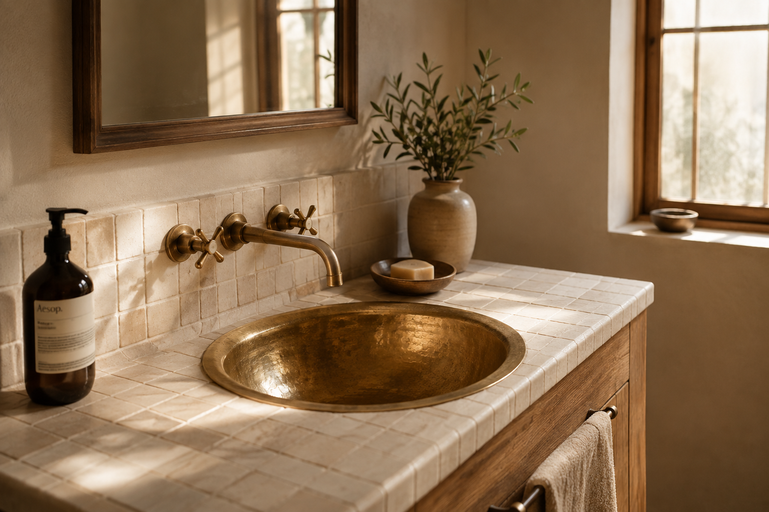
This is really a style choice, and there’s no wrong answer.
If you love the aged, antique look: do less. Clean gently with soap and water, skip the polish, and let the brass darken and vary naturally over months and years. This is how most of our customers choose to live with their pieces — the patina is the point.
If you prefer a brighter, more uniform shine: polish every one to a few months depending on humidity and use, and consider a thin coat of carnauba wax or a similar protective wax after polishing. The wax won’t stop the metal from aging entirely, but it slows the process and makes the shine last noticeably longer between polishes.
Either way, the brass is doing exactly what solid, uncoated brass is supposed to do — there’s nothing wrong with your fixture if it starts to darken or spot slightly within the first few weeks.
A Quick Note for Brass Sinks and Faucets
Kitchen and bathroom pieces see more water contact than decor items, so a couple of extra habits help:
- Keep a small dry cloth near the sink and wipe it down after use — a five-second habit that prevents most water spotting.
- Avoid letting citrus, tomato sauce, or vinegar-based cleaners sit on a brass basin or countertop faucet.
- If your fixture sees heavy daily use, a light coat of wax every few months will noticeably reduce fingerprint marks and spotting between deeper cleans.
The Bottom Line
Unlacquered brass isn’t high-maintenance — it’s just honest. It shows how it’s used, ages the way real materials age, and rewards a light touch rather than aggressive scrubbing. A soft cloth, warm soapy water, and the occasional polish (or none at all, if you love the patina) is all it takes to keep a hand-hammered piece looking beautiful for decades.
Every fixture in our collection is hammered by hand in Fez and Marrakech from pure, uncoated brass — no shortcuts, no synthetic coating hiding the craftsmanship. Explore the collection or read more about our artisans to see how each piece is made.
FAQ
Is unlacquered brass hard to maintain? No — everyday care is just warm water, mild soap, and a soft cloth. The extra step (polishing) is entirely optional and depends on whether you want a bright shine or a natural patina.
Will my brass sink or faucet turn green? Bare brass can develop verdigris (a greenish tint) in very humid environments or with prolonged water exposure, though a warm, brown-gold patina is far more common. Regular drying after use prevents most of this.
Can I use vinegar or lemon on unlacquered brass? Yes, in a diluted paste for spot-cleaning tarnish, but limit contact time to under a minute and rinse thoroughly — left too long, the acid will strip the patina unevenly.
How often should I polish unlacquered brass? Anywhere from once a month to twice a year, depending entirely on how bright you want it. There’s no required schedule — many owners never polish at all and prefer the aged look.